Getting people cleared to work airside can feel complex. This guide breaks the process into simple steps, so you can onboard compliant staff faster while protecting safety and security standards at every stage.
Market Context — Hiring Trends
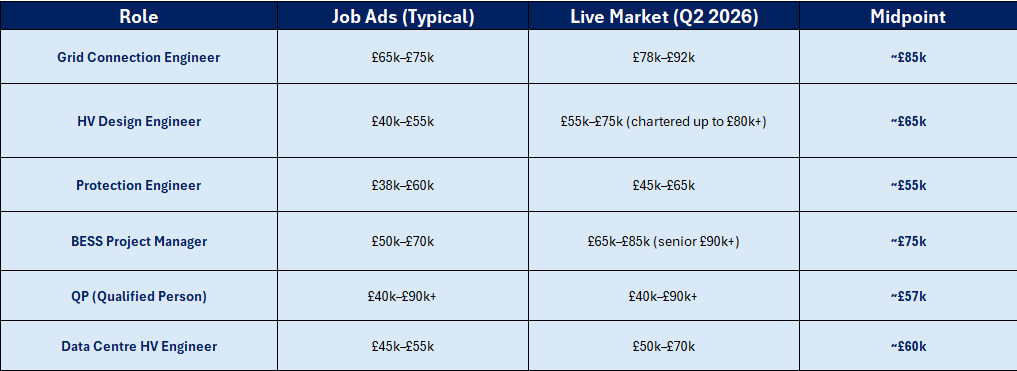
The UK BESS and power infrastructure market remains highly competitive, driven by grid upgrades, storage deployment, and continued investment in flexible energy assets. Demand is strongest for Grid Connection Engineers, HV Design Engineers, Protection Engineers, and BESS Project Managers, with experienced candidates consistently commanding premiums above advertised rates.
Projects are moving faster than the available talent pool. Employers are prioritising candidates with hands-on grid, HV, and energy storage experience, while hiring timelines are extending, particularly for roles requiring HV authorisation, grid expertise, or project delivery experience. Shortlist quality and speed to hire are now critical.
This imbalance is reflected in hiring timelines. Specialist engineering roles are increasingly taking 30–50% longer to fill compared to pre-2023 benchmarks, particularly where HV experience, grid expertise, or regulatory sign-off is required. At the same time, candidates are becoming more selective, often evaluating multiple offers before accepting.
The market trend is clear: projects are moving faster than the talent pool. Employers are prioritising candidates with hands-on grid, HV, and energy storage experience, while hiring times are lengthening and shortlist quality matters more than ever. For Aviserv, this is a specialist market where speed, technical understanding, and market knowledge make the difference between filling a role and missing the hire.
Aviserv focuses specifically on these markets, allowing us to:
● Identify qualified candidates faster through targeted networks, not broad job ads
● Accurately benchmark salaries based on live hiring activity, not outdated surveys
● Reduce time-to-hire by prioritising pre-qualified, technically relevant candidates
● Deliver higher-quality shortlists aligned to both technical and commercial requirements
The result is a more efficient hiring process, fewer interviews, faster decisions,and better long-term hires.
Sources & Footnotes
Grid Connection Engineer Salary ranges based on live UK job postings (LinkedIn Jobs, Indeed, Totaljobs) cross-referenced with industry benchmarks from Astute People and compensation data from Glassdoor. Market uplift reflects observed offers in renewable developer and grid-scale infrastructure projects.
HV Design Engineer Benchmarked using UK salary data from Glassdoor, supported by engineering recruitment salary guides (e.g. Hays, Robert Walters). Higher-end ranges reflect chartered engineers and complex infrastructure project exposure.
Protection Engineer Salary data validated against Salary Expert UK benchmarks and live job postings across transmission, distribution, and renewable energy employers. Market adjustment reflects demand for relay and grid protection expertise.
BESS Project Manager Based on UK salary data from Glassdoor and live hiring trends across battery storage developers and EPC contractors. Upper ranges reflect candidates with combined grid, EPC, and project delivery experience in utility-scale storage.
QP (Qualified Person) Salary benchmarks sourced from Association of the British Pharmaceutical Industry guidance and supported by life sciences salary reports (e.g. Hays). Range reflects regulatory responsibility, licensing scope, and company size.
Data Centre HV Engineer Derived from UK salary data on Glassdoor and job postings on platforms such as Career Structure. Market ranges reflect HV Authorised Engineers and critical power specialists rather than general facilities roles.
Market Intelligence & Insights
The UK BESS and power infrastructure hiring market continues to operate under sustained supply constraints, with demand for grid and HV skillsets significantly outpacing available talent.
Salary inflation is being driven by project demand, not market cycles Grid and BESS-related roles have seen 10–20% increases in accepted offers vs advertised salaries, particularly on developer-side projects where delivery timelines are fixed.
Time-to-hire has increased materially Specialist roles are taking 30–50% longer to fill compared to pre-2023 levels, with delays most acute in Grid Connection, Protection, and HV Authorised Engineer positions.
The grid and HV talent market is structurally split There are two distinct hiring markets:
Utilities and legacy infrastructure: £45k–£60k
Renewable developers and private infrastructure: £65k–£90k+ Most public salary data reflects the lower band, while actual hiring outcomes sit in the upper range.
BESS project delivery roles are the fastest-moving segment Project Managers and delivery-side engineers are seeing the highest upward pressure on salaries, with experienced candidates often managing multiple offers simultaneously due to limited supply.
Candidate behaviour has shifted Shortlisted candidates are now typically engaged in 2–3 concurrent processes, with acceptance decisions driven by project exposure, delivery ownership, and long-term pipeline visibility — not just salary.
Published salary data is consistently behind the market Most salary benchmarks reflect advertised ranges, which lag real hiring conditions by 6–12 months. Live market data shows that final offers are regularly agreed above published ranges to secure critical hires.
How Aviserv Bridges This Gap
Aviserv operates in a market where technical accuracy and speed directly impact hiring outcomes. We focus on BESS, power infrastructure, and adjacent sectors, allowing us to benchmark roles against live hiring activity rather than historic data.
We deliver:
Targeted candidate identification through specialist networks
Salary insight based on active searches and candidate movement
Reduced time-to-hire through pre-qualified shortlists
Alignment between technical requirements and commercial expectations
The result is a more efficient hiring process — fewer interviews, faster decisions, and stronger long-term hires.
More Blogs
October 10, 2025
From Empty Spaces to Fully Staffed Operations
How Aviserv turns vacant sites into fully staffed, efficiently run operations across multiple industries...